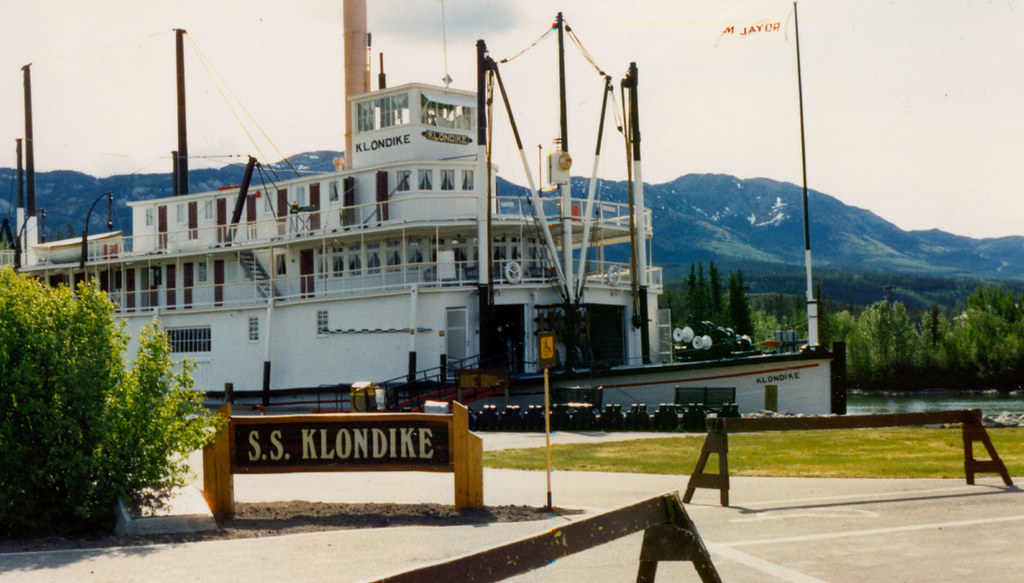
The SS Klondike is one of Canada’s few remaining steam-powered paddlewheelers that were used to transport people and materials throughout the Yukon. The remaining SS Klondike is actually the SS Klondike II, built in 1937 from the remains of her predecessor Klondike I.
Klondike I was built by the British Yukon Navigation Company in 1929. At the time, the river was the Yukon’s only connection to the outside world. The ship was unique for having 50% more capacity than the average paddlewheeler while still meeting the limited size requirement for traveling along the Yukon River. She was active until June of 1936, when she accidentally ran aground just north of the trading post of Hootalinqua. The boilers, engine, and other fittings were salvaged and used to recreate the ship as Klondike II. The rest of the remains can be seen in the Yukon River to this day.
Klondike II was launched in May of 1937. She operated as a freight and passenger vessel until 1950, when the highway between Whitehorse and Dawson City was completed. The arrival of the highway made river travel obsolete, and most of Canada’s riverboats were decommissioned. Klondike II briefly served as cruise ship until 1955, before finally being retired. She was restored to the 1937-40 period vessel by Parks Canada, and now exists as a museum ship and historical monument, commemorating the history of inland water transport along the Yukon River.