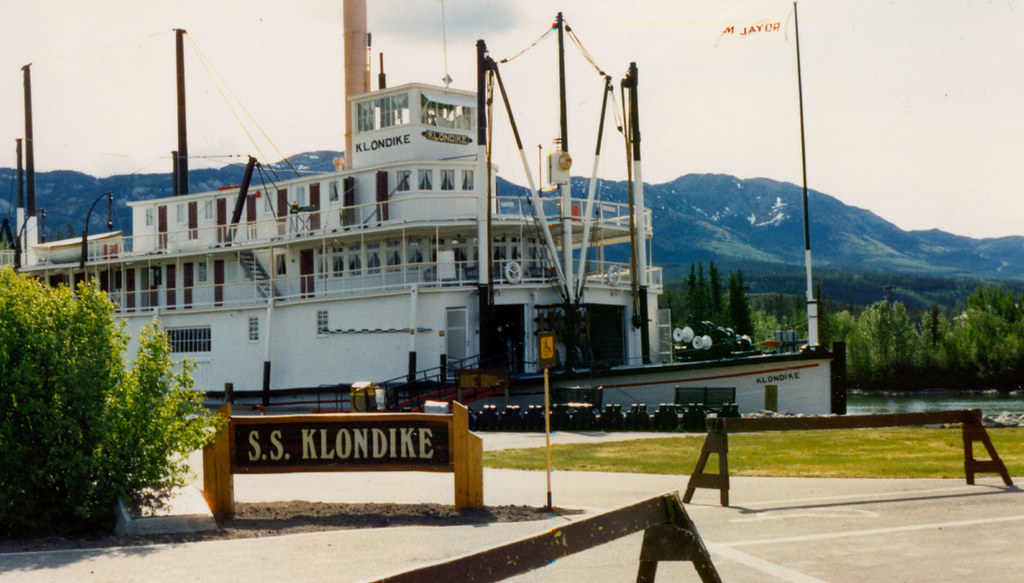
The SS Klondike is one of Canada’s few remaining steam-powered paddlewheelers that were used to transport people and materials throughout the Yukon. The remaining SS Klondike is actually the SS Klondike II, built in 1937 from the remains of her predecessor Klondike I.
Klondike I was built by the British Yukon Navigation Company in 1929. At the time, the river was the Yukon’s only connection to the outside world. The ship was unique for having 50% more capacity than the average paddlewheeler while still meeting the limited size requirement for traveling along the Yukon River. She was active until June of 1936, when she accidentally ran aground just north of the trading post of Hootalinqua. The boilers, engine, and other fittings were salvaged and used to recreate the ship as Klondike II. The rest of the remains can be seen in the Yukon River to this day.
Klondike II was launched in May of 1937. She operated as a freight and passenger vessel until 1950, when the highway between Whitehorse and Dawson City was completed. The arrival of the highway made river travel obsolete, and most of Canada’s riverboats were decommissioned. Klondike II briefly served as cruise ship until 1955, before finally being retired. She was restored to the 1937-40 period vessel by Parks Canada, and now exists as a museum ship and historical monument, commemorating the history of inland water transport along the Yukon River.
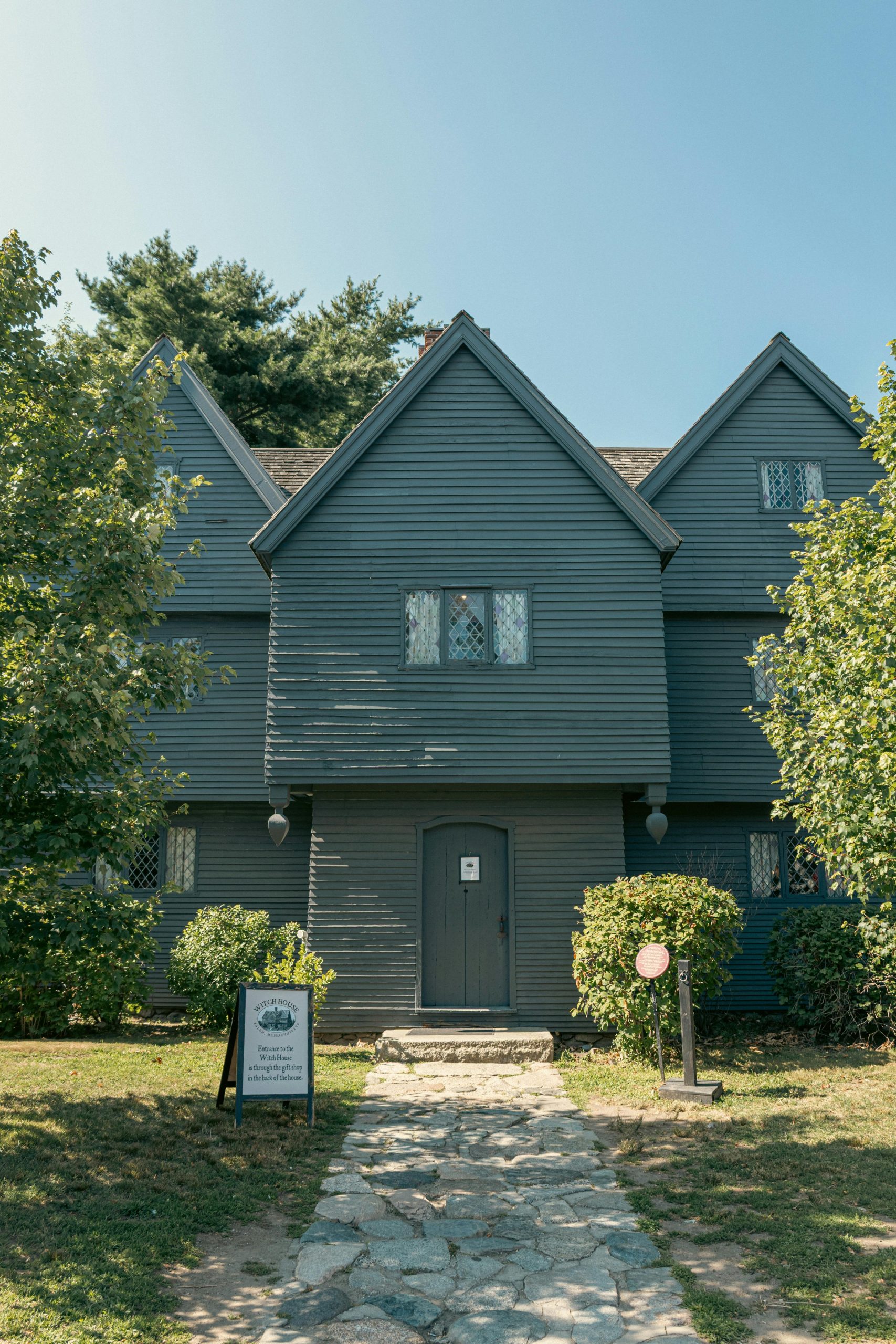
The Witch House in Salem, Massachusetts, is the only remaining structure that is directly connected to the Salem Witch Trials of 1692. Built in 1675, this two-story house served as the residence for Judge Jonathan Corwin, who presided over the trials. There were so many accused witches and so few places to question them, and so often the accused were interrogated in Corwin’s own home, in the eastern front room of the house. Through Corwin, nineteen people were charged with the crime of witchcraft and sent to the gallows.
The house passed on to Corwin’s son and grandson before being converted into an apothecary in 1866. Today, the house remains as a reconstructed museum, owned and operated by the City of Salem.
The Yukon is home to hundreds of different species of animals, from flocks of migratory ducks to massive herds of caribou. The boreal forests, mountain alpines, arctic tundra, and coastal plains that make up the Yukon host an incredibly diverse set of birds, mammals, insects, amphibians, and more.
Birds
About 87% of all the birds found in the Yukon are migratory, spending the winter in the warm south. A few hardier birds live in the Yukon-year round, even as snow blankets the ground and drives insects, small animals, and other food sources into hiding. These resident birds are the ones you’ll be most likely to spot on Expedition Aurora, and are a treat for any birdwatcher.
The Rock Ptarmigan (Lagopus muta) is one such resident bird. With a beautiful white plumage that blends into the snow, they can be hard to spot, save for the bright redeye comb worn by males. During the winter, they feed on plant buds and seeds, and dig burrows into the snow to roost in and hide away from the freezing cold. Rock ptarmigans are the official territorial bird of Nunavut, Canada, and the official game bird of Newfoundland and Labrador.
The Northern Goshawk (Accipiter gentilis) is another resident of the Yukon, living year-round in old-growth forests. Fierce, wild, and aggressive, the Northern Goshawk have a long tail, gray plumage, and bold white stripes over their piercing red or orange eyes. They are very secretive and rarely seen, but that may be for the better: they are viciously defensive of their nests, and have been known to attack humans that wander too close.
The Great Horned Owl (Bubo virginianus) is perhaps the most exciting bird to spot in the Yukon. With a deep hooting call, twin horns on their heads, and wide, intimidating yellow eyes, the Great Horned Owl is the quintessential bird of myth and legend. Their nocturnal hooting can be heard year-round throughout North American and parts of South America, particularly in dense forests. In the Yukon, their primary prey are Snowshoe Hares, but as food becomes scarce, they will also hunt muskrats, ducks, and even other birds of prey.
Carnivores
Ungulates
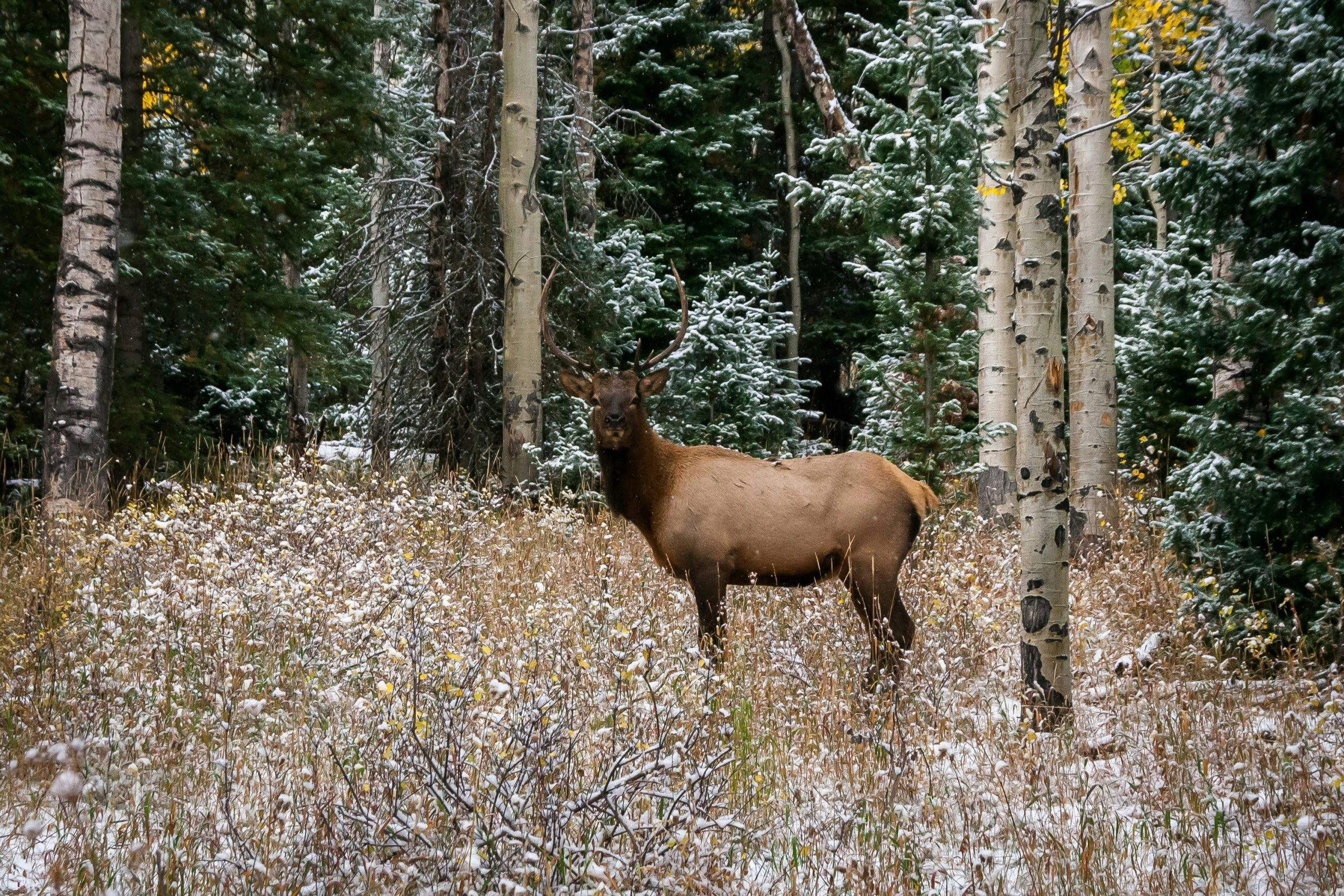
Ungulates, or mammals with hooves, are spread throughout the Yukon and divided into two types: cervidae, or antler-bearing ungulates like deer, moose, and elk, and bovidae, or horned ungulates like goats and sheep. Ungulates are entirely herbivorous, feeding on leaves and shrubs or grazing on grasses. Some live solitary lives, while others form massive herds to protect themselves and their young from predators.
The Mule Deer (Odocoileus hemionus) is one such ungulate that lives in the Yukon. With tan fur, small tail, and medium build, the Mule Deer looks very similar to the White Tail Deer (Odocoileus virginianus) found throughout North America. Mule Deer can be identified by their large, mule-like ears, prominent white rump patch, and forked antlers. Mule Deer are easily found in the Takhini and Yukon River Valleys near Whitehorse, grazing on flowers, shrubs, and berries.
The Dall’s Sheep (Ovis dalli dalli) is the most common sheep found in the Yukon. Typically all- white with large, curling horns, the Dall’s Sheep is one of three types of Thinhorn Sheep. They spend their spring and summer grazing in alpine meadows throughout the Yukon, before migrating to warmer, south-facing mountains for the winter. They use these same migration routes for generations, and give birth along the same mountains that they themselves were born at. Moose (Alces americanus) are the largest and perhaps most well-known of the ungulates found in the Yukon. They dominate the forests, standing over 6 feet tall and weighing over 1,000 pounds. Like other deer, Moose grow antlers, and their size and symmetry indicate health, dominance, and strength. They can be found across the Yukon, though are most likely to be found along rivers and lakes further from human civilization.
At-Risk Species
While the Yukon may be home to at least 10,000 animal and plant species, there are some at risk of extinction. Species at-risk are plants and animals whose numbers in the wild have dwindled alarmingly low, for one reason or another. Protecting these species and their habitats is important, to keep the species from going extinct and further upsetting the balance of nature.
The Horned Grebe (Podiceps auritus) is one such at-risk species. Horned Grebes are ducks with a striking plumage and silhouette, with bold black-and-red feathers and bright yellow or red ‘horns’ that they can raise or lower at will. Horned Grebes are a migratory bird, and nest in the Yukon to breed. Sadly, their population in the wild has declined by 79% in North America over the last three decades, mostly due to human actions disturbing and degrading their breeding sites.
The Wolverine (Gulo gulo) is another species at risk of extinction. Stocky and muscular, these weasels typically scavenge carrion, they have also been known to prey on smaller mammals, birds, and even young bison or moose. Wolverines have an enormous habitat range, sometimes spanning over 200 miles of territory. As such, they lose much of this territory to human activity, including roads, which they avoid and rarely cross. Their low density and secret nature makes them difficult to track, so exact numbers are unknown, even if Wolverine populations are believed to be stable.
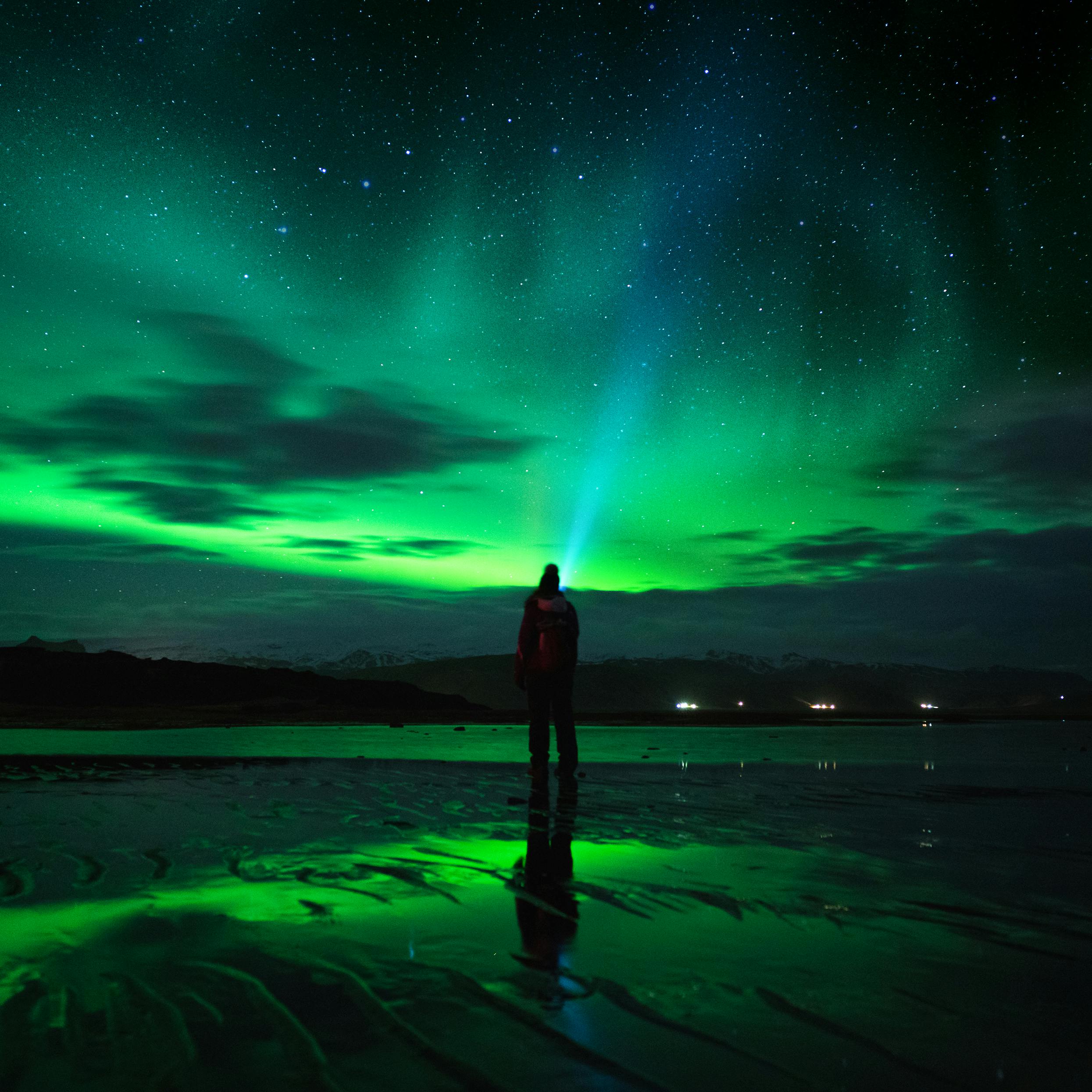
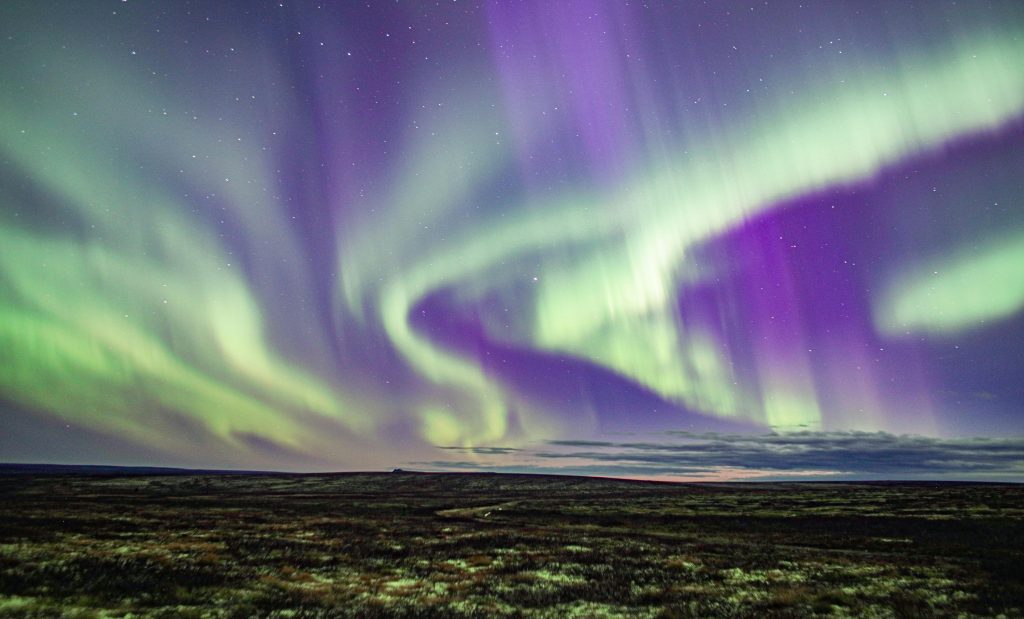
The aurora borealis, also known as the northern lights, are an incredible natural wonder. Named after the Roman goddess of dawn, the aurora is a colorful phenomenon that appears in the night sky around both the north and south poles, usually between the months of November and February. But what causes such a magical marvel?
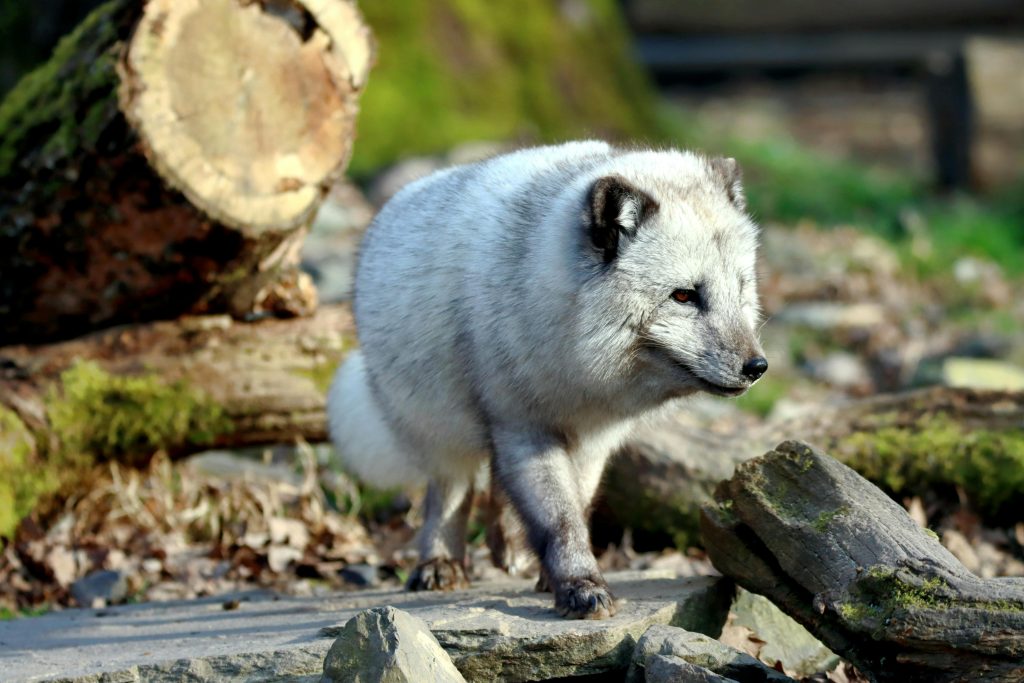
Plenty of cultures around the world had their own explanations for the northern lights. To the Cree people, the aurora was how the spirits of the deceased communicated with the living. For the ancient Nords, the lights were reflected off of the armor of the Valkyries, or in some tales made up the bridge that led worthy souls to Valhalla. To Swedish fisherfolk, the shimmering lights were a sign of good fortune and a generous catch of herring, but to Civil War soldiers, the glowing red sky was an omen of death. Perhaps most famously, Northern Finns believed the aurora came from static sparked by the tail of the tulikko, or firefox, a mythical animal that was said to be every hunter’s greatest ambition.
In reality, the aurora comes from a complex series of chemistry, physics, and magnetism. Earth has a massive magnetosphere, essentially a giant magnetic shield that protects us from harmful energy from space, like solar wind or coronal mass ejections. Sometimes, these particles that strike the magnetosphere transfer their energy to the magnetosphere itself, and if too much energy is transferred, the magnetosphere can overload and conjure up a geomagnetic storm. These geomagnetic storms create the auroras, releasing that pent-up energy in the form of dancing light.
Oxygen causes green light at an altitude of 60-120 miles (100-120km), but turns red at higher altitudes.
The geomagnetic storms explain the formation of the lights, but to understand where the color comes from, we have to turn to chemistry. The aurora borealis, while typically green, can come in a variety of colors, such as pink, red, purple, or blue. The color depends on both the type of gas particles that are excited and the altitude of these particles. Oxygen, for example, causes green lights at an altitude of 60-120 miles (100-200 km), but at an altitude above that, the oxygen turns red. Nitrogen, when within the 60-120 mile (100-200km) altitude range, can appear either blue or pink depending on the type and energy level of the particle interacting with it. These colors may also ‘mix’, causing muddled purples, pinks, or even whites to appear.
Geomagnetic storms are massive confluences that can cover the entire planet. However, they are pretty rare; for a true geomagnetic storm to hit, the magnetosphere of the Earth has to be seriously disrupted, usually by a coronal mass ejection, or CME, which can fling billions of tons of solar material into space. Most auroras are instead caused by geomagnetic substorms, which occur when just a portion of the magnetosphere is disturbed. The charged particles that hit the magnetosphere have to follow the lines of the magnetic field, spiraling up or down until they reach the poles and create substorms. These substorms then create both the aurora borealis and the aurora australis.
While geomagnetic storms and solar flares aren’t as mystical as talking spirits or firefoxes, they don’t make the aurora borealis any less breathtaking and magical. It’s an incredible experience that you can never forget, especially when coupled with wildlife safaris, hot spring visits, and dogsledding. Learn how to have the trip of a lifetime with Argo Adventures.