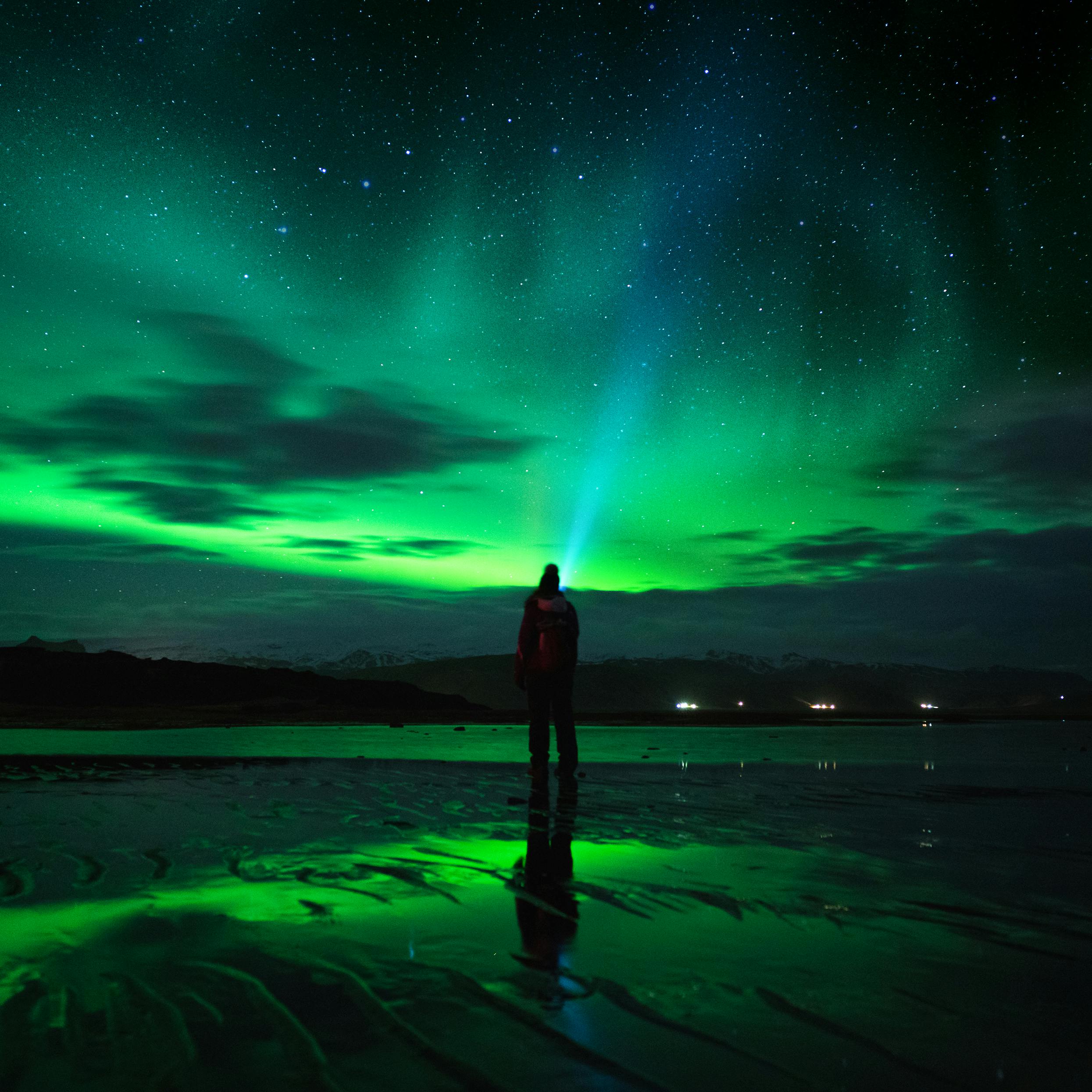
The aurora borealis, also known as the northern lights, are an incredible natural wonder. Named after the Roman goddess of dawn, the aurora is a colorful phenomenon that appears in the night sky around both the north and south poles, usually between the months of November and February. But what causes such a magical marvel?
Plenty of cultures around the world had their own explanations for the northern lights. To the Cree people, the aurora was how the spirits of the deceased communicated with the living. For the ancient Nords, the lights were reflected off of the armor of the Valkyries, or in some tales made up the bridge that led worthy souls to Valhalla. To Swedish fisherfolk, the shimmering lights were a sign of good fortune and a generous catch of herring, but to Civil War soldiers, the glowing red sky was an omen of death. Perhaps most famously, Northern Finns believed the aurora came from static sparked by the tail of the tulikko, or firefox, a mythical animal that was said to be every hunter’s greatest ambition.
In reality, the aurora comes from a complex series of chemistry, physics, and magnetism. Earth has a massive magnetosphere, essentially a giant magnetic shield that protects us from harmful energy from space, like solar wind or coronal mass ejections. Sometimes, these particles that strike the magnetosphere transfer their energy to the magnetosphere itself, and if too much energy is transferred, the magnetosphere can overload and conjure up a geomagnetic storm. These geomagnetic storms create the auroras, releasing that pent-up energy in the form of dancing light.
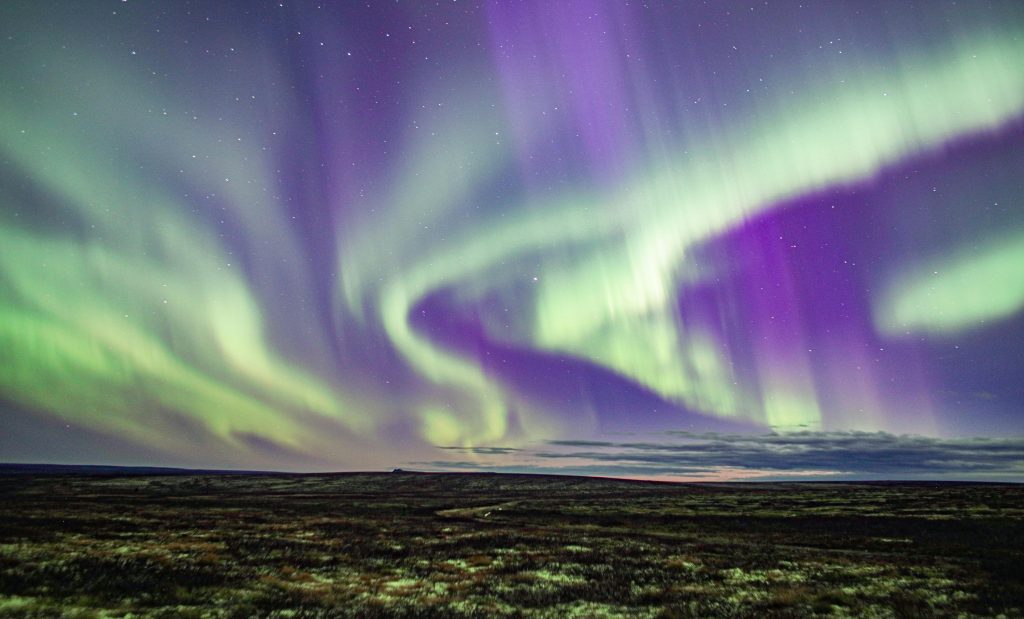
The geomagnetic storms explain the formation of the lights, but to understand where the color comes from, we have to turn to chemistry. The aurora borealis, while typically green, can come in a variety of colors, such as pink, red, purple, or blue. The color depends on both the type of gas particles that are excited and the altitude of these particles. Oxygen, for example, causes green lights at an altitude of 60-120 miles (100-200 km), but at an altitude above that, the oxygen turns red. Nitrogen, when within the 60-120 mile (100-200km) altitude range, can appear either blue or pink depending on the type and energy level of the particle interacting with it. These colors may also ‘mix’, causing muddled purples, pinks, or even whites to appear.
Geomagnetic storms are massive confluences that can cover the entire planet. However, they are pretty rare; for a true geomagnetic storm to hit, the magnetosphere of the Earth has to be seriously disrupted, usually by a coronal mass ejection, or CME, which can fling billions of tons of solar material into space. Most auroras are instead caused by geomagnetic substorms, which occur when just a portion of the magnetosphere is disturbed. The charged particles that hit the magnetosphere have to follow the lines of the magnetic field, spiraling up or down until they reach the poles and create substorms. These substorms then create both the aurora borealis and the aurora australis.
While geomagnetic storms and solar flares aren’t as mystical as talking spirits or firefoxes, they don’t make the aurora borealis any less breathtaking and magical. It’s an incredible experience that you can never forget, especially when coupled with wildlife safaris, hot spring visits, and dogsledding. Learn how to have the trip of a lifetime with Argo Adventures.
Leave a Reply