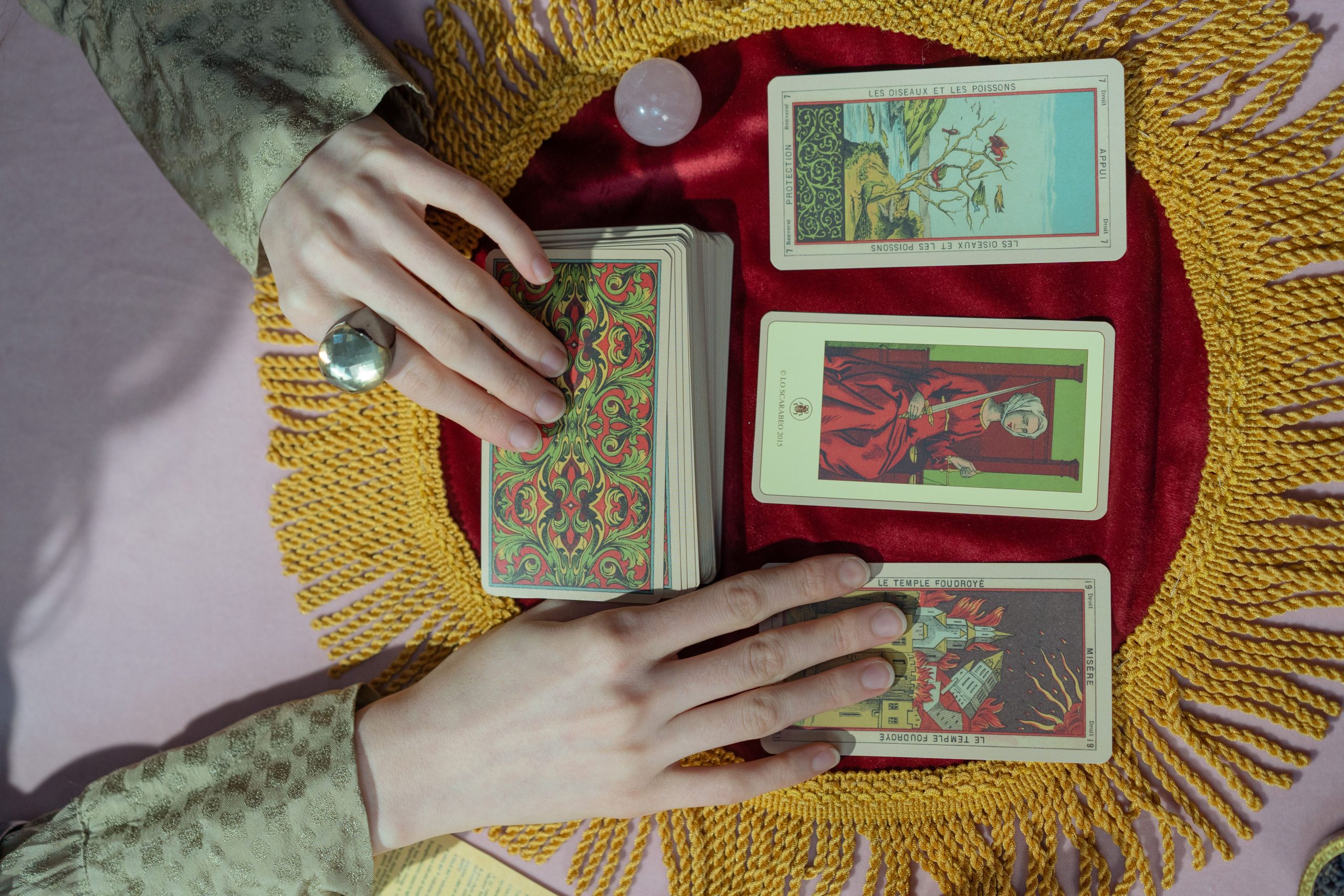
Tarot cards are a series of 78 illustrated cards used for divination. These cards are divided into twenty-two Major Arcana cards and fifty-six Minor Arcana cards, in turn divided into four suits (Cups, Swords, Pentacles, and Wands). Each card symbolizes a different event, feeling, or concept, such as “new beginnings”, “change”, or “doom”. The nature of this divination can change; for some, tarot is a way to examine the past, understand the present, and peer into the future. For others, it is a meditative practice of self-reflection. Whatever the diviner’s reasons for doing a reading, tarot readings can be done by oneself or interpreted by someone else.
The History of Tarot
Tarot’s origins are shrouded in mystery. Some claim an Egyptian, Indian, Chinese, or Korean origin to the cards, but these theories are unfounded. The first historical evidence of tarot cards comes from 15th century Venice, where they first served the Renaissance nobility as a card game. They did not take on an esoteric function until the 18th century, when French cartomancer Etteilla incorporated tarot cards into his work. Tarot mixed with other occult practices, like numerology and Jewish mysticism, in the mid-1800s, and the ‘Major’ and ‘Minor’ Arcana were defined for the first time.
In 1888, the Hermetic Order of the Golden Dawn was formed, a group that studied and practiced occult magic. Pamela Coleman Smith, a member of the Order, would go on to create perhaps the most recognizable tarot deck, with the first example of illustrated Minor Arcana that would go on to define the design of tarots decks. Today, the Major and Minor Arcana remain as staples of tarot decks, though the illustrations of the decks can vary widely with a variety of themes and reinterpretations.
Tarot Readings
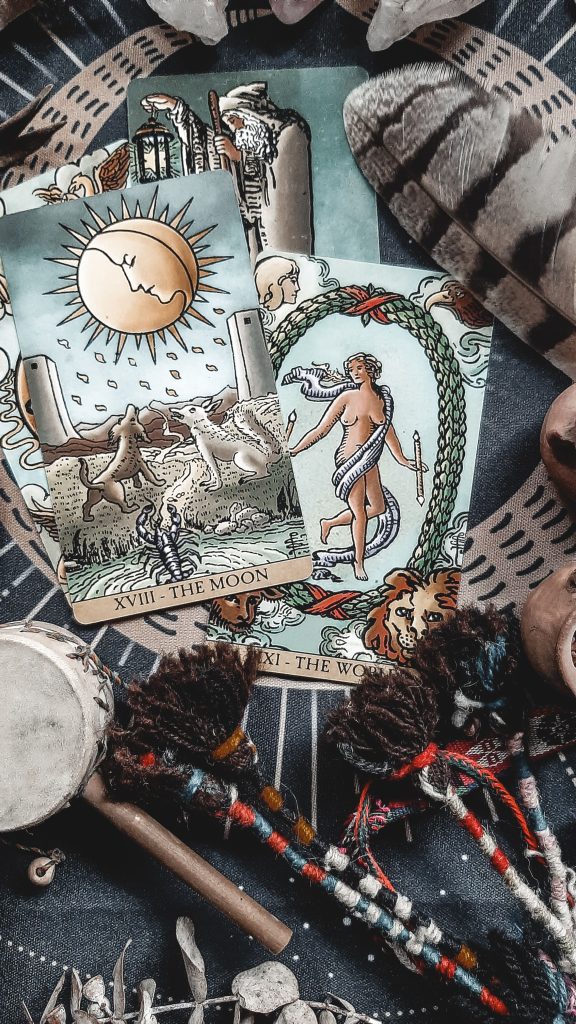
As mentioned, a tarot reading can be as easily performed by oneself as by someone else. A tarot reading usually begins by having the diviner focus on a question they want an answer to while shuffling the deck. Then, they draw cards at random from the deck, usually three to represent the past, present, and future, but can draw as many as they want depending on the specific type of reading. Once the cards are drawn, the diviner interprets what lies before them.
Interpretation is the heart of tarot. Everything means something: from the orientation the cards sit in, to the placement of the cards in relation to each other, to whether a card was drawn from the deck or fell out by chance. A reversed Five of Cups to the left of The Hermit is very different from a Five of Cups to the right of a revered The Hermit, but how it differs depends on the diviner, what answers they’re looking for, and their own beliefs, relationships, experiences, and intuition. While there are guidebooks to help a novice interpret the cards, it is the diviner who ultimately decides what the story of the cards is.
Is Tarot Real?
Just like readings themselves, the reality of tarot is up to the interpretation of the reader. Some may see tarot readings as a true form of divination, where the cards are truly showing them their future. However, the more common interpretation of tarot is as a reflective, insightful meditation. Tarot cards and the meanings associated with them serve as a framework for pattern recognition and story-making. In this interpretation, the cards reveal your inner thoughts and feelings, allowing you to understand the path you’re on. That’s why two people who draw the same cards may come away with wildly different readings and interpretations based on their experiences, feelings, and beliefs. In short, tarot is real if you want it to be.
Leave a Reply